The House of Meticulous Rot
1. A Feast for the Elements
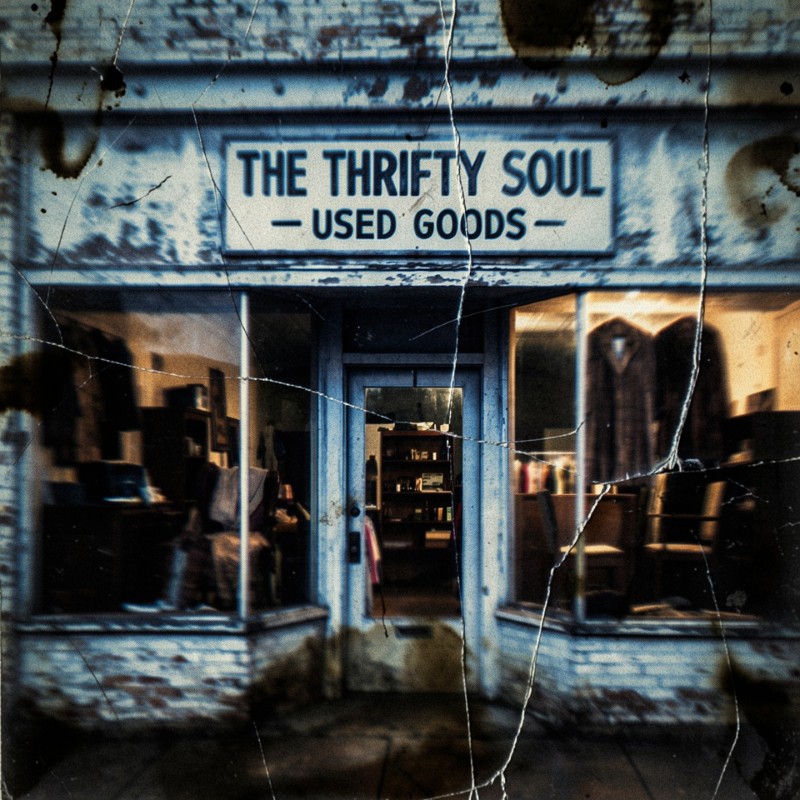
The decay of Dixon Falls was not a passive thing; it was an appetite.
Two hours west of Chicago’s soaring, architectural indifference, a landscape of steel giants and calculated shadows, the town sat as a feast for the elements, a discarded relic of an industrial age that had long since forgotten its own name. The local factory was a sprawling carcass of corrugated tin and soot-stained brick, a metal cathedral that had long ago ceased its rhythmic, industrial breathing. Now, its windows were the milky eyes of a corpse, reflecting only the bruised Illinois sky and the tallgrass that clawed at its foundations like green fire.
Eleanor lived on a block where the silence possessed a physical weight, a pressure that pushed against the eardrums like deep water. The houses were leaning skeletons with porches that sagged like the jowls of the ancient, their paint peeling in long, translucent strips that fluttered like ribbons of sun-dried flesh.
Most of her neighbors had fled toward the siren song of better opportunity, leaving behind only the wind and the stray cats that slunk through the weeds like silk-clad demons. She was eighty-four, and her body was a cathedral she maintained with a grim, liturgical pride, though she knew the architecture was failing. Her health was fair in the eyes of the doctors who spoke to her with the hollow sweetness of a funeral bell, but she knew the truth.
Her mind was a fraying rope. Dementia had hunted her lineage for generations, a transgressive predator that turned fathers into strangers and mothers into hollow vessels.
The Grey Fog was a predator that did not kill, but merely erased.
Every morning, the ritual began with a sacrifice. She stepped onto her porch and the wood groaned with a sound like snapping bone, a sharp punctuation in the stillness of the dying neighborhood. From the shadows of collapsed garages and rusted sedans, her congregation emerged. A tattered ginger tom with half an ear and a sleek black queen led the way, their movements fluid and predatory. She fed them with a devotion that bordered on the religious, watching their frantic hunger with a mix of pity and envy. Inside, her own two cats, Barnaby and Minks, conducted a cold war of hisses and arched backs, two bitter spirits sharing a space they both loathed, waiting for the other to reveal a fatal weakness.
It was Tuesday, the day of the resale shop, and Eleanor climbed into her Buick, a 1998 beast that smelled of peppermint and the slow, sweet rot of upholstery. The Thrifty Soul was a museum of the discarded, located in what used to be the town’s pharmacy, its shelves groaning under the weight of lives that had been surrendered to estate sales and foreclosure.
Eleanor moved through the aisles with a predator’s focus, her eyes scanning for the anchors she required to moor her drifting mind against the tide of the forgetting. She was digging through a bin of linens when she saw it. Tucked inside a canvas bag the color of a wet sidewalk was a glass sphere the size of a baseball, a leaden secret that seemed to vibrate against her skin. Attached to the drawstring was a piece of parchment, the handwriting a dense, frantic script: To live forever is to be the soil; to never die is to be the worm that eats it. The flesh is a cage, but the glass is a window.
She carried the bag to the counter, where Miller sat behind a plexiglass shield, his face a map of soft Midwestern folds and quiet resignation. He was a man of sturdy flannels and faded baseball caps, a familiar fixture in her weekly liturgy of browsing.
"Found something to keep you busy, Eleanor?" he asked, his voice a steady, comfortable rumble that carried the cadence of decades spent in church basements and VFW halls.
He pulled the sphere toward him, his brow furrowing as he squinted through his bifocals. He turned the canvas bag over in his hands, feeling the unusual, dense weight of the object inside.
"I’ll be honest, I can't quite place what this is," Miller said. "Came in with a load from the old factory supervisor's house—Elias Thorne. You remember the name? It’s a bit too heavy for a paperweight and too pretty for a doorstop."
He chuckled softly, a sound of genuine, harmless bafflement, as he tried to peer through the weave of the bag. "Thought about putting it in the window to catch the sun, but I wasn't sure if it’d act like a magnifying glass and set the place on fire. Five dollars sounds fair, don't you think?"
He took the bill she offered with a polite nod, sliding the sphere back across the counter with a gentle, calloused hand. "Enjoy the research, Eleanor. You always did have a knack for finding the things everyone else missed."
She offered a thin, practiced smile, though her fingers ached with a sudden, sharp desire to clutch the bag tightly to her chest. The sphere was a promise of a beauty that required no heartbeat.
As she drove home, the glass ball sat on the passenger seat like an unblinking eye, watching the ruins of Dixon Falls roll by. She did not go to the pizza buffet that day. The hunger she felt now was of a different kind, a vast and hollow craving that no amount of grease or fluorescent light could ever hope to satisfy. She parked the Buick and walked toward her front door, sensing for the first time that the air around her house had grown thin and expectant, as if the walls themselves were holding their breath in anticipation of what she was bringing inside.
The tale continues...
< Previous | Index | Next >